AI, skeuomorphism, and why I think dashboards (and other ways of working) will die out
Or: why dashboards will be disposable in the future
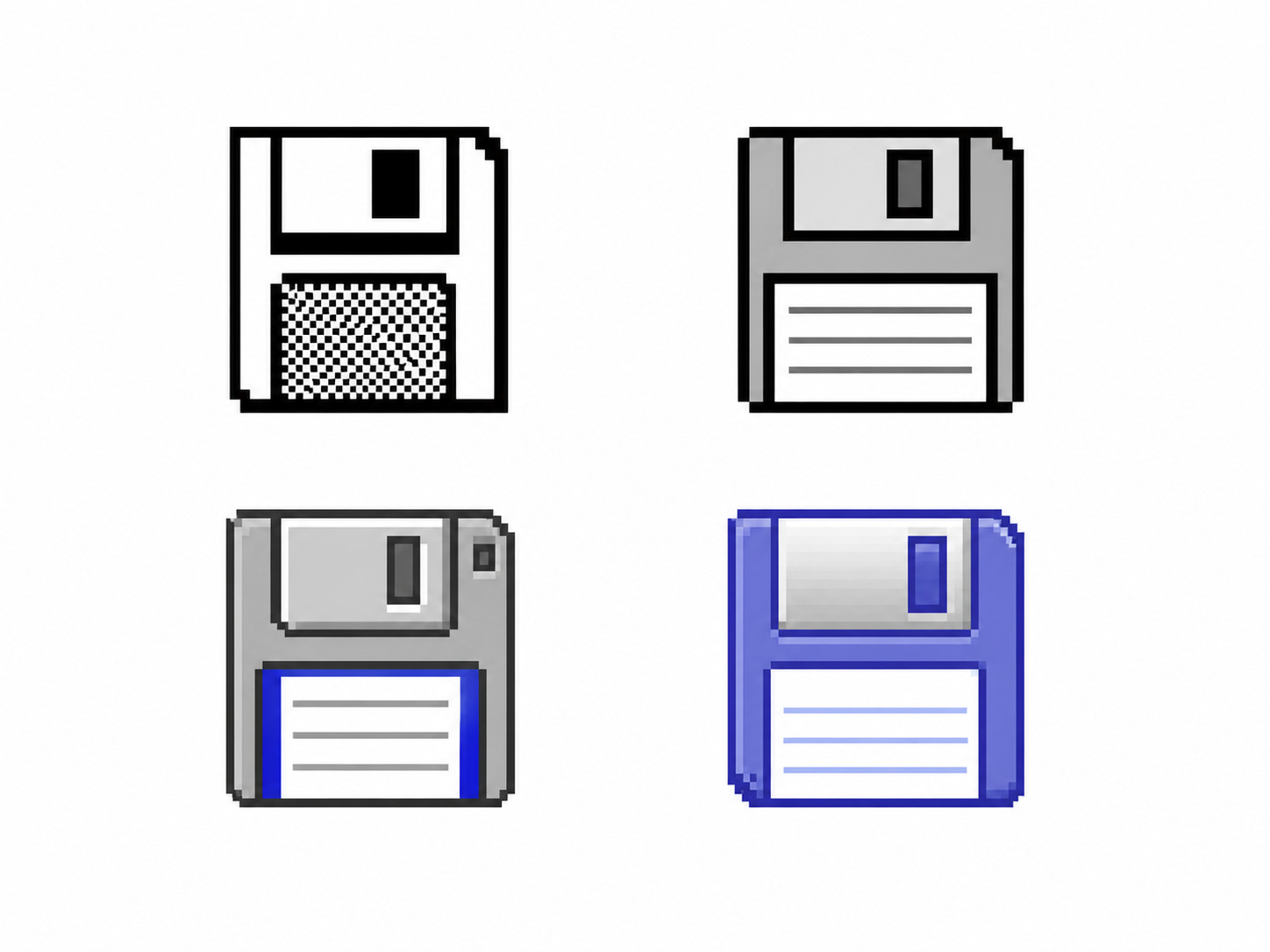
It’s only in the last few years, as auto-save has become dominant, that we no longer ‘click save’.
But for a good 20-year run, people clicked on a little icon of a floppy disk not knowing why that button represented the action of ‘saving.’
We became an AI-native agency a few months ago. I’d also define that a few of our clients are AI-native versions of whatever their company is as well.
What’s interesting is seeing how two AI-native companies interact with each other. Or more specifically how the humans within those businesses react.
What’s immediately becoming clear is that so much of the way that organisations, teams, clients, partners operate, is because of the natural limitations of prior working conditions. And actually in this new world, just like the floppy disk, likely will soon become redundant.
One Claude negotiates with another Claude
For the last 18 months, AI-written email has become the commonplace.
But like all AI-native evolutions, in the early days it was “I want to say something like this, re-write it so that XYZ happens.”
Today, those who are expert do this differently.
I’ve had a few email negotiations this year where the AI usage was far more evolved. You can tell through writing style and verbosity that it’s AI immediately, but actually beneath the tells, there was significant substance to what was being asked.
On our side, we have operations and business leadership AI that understands different service offerings, understands the systems, what clients actually use, and our ‘rules’ which we may have. So a response is not just me saying “I want xyz, go write me an email to get it,” the response is based on understanding the full context of our business.
What feels odd is that at the bottleneck of this was two or three humans acting as negotiatiors-cum-conduits.
In corporate life, you would have an army of lawyers and dozens of stakeholders on either side fighting these corners, but ultimately all comms leading through a single point of contact.
That is where this new negotiation world feels, except instead of the lawyers and stakeholders, you’ve got agents representing those views.
But I wonder if there’s a future where the human isn’t needed at all.
What if each side set their desired outcomes, their guardrails, their limits, and let the agents discuss freely?
Without human emotion wrapped up in it, it’s likely that more equitable outcomes for all parties might come out on top.
It feels to me we’re in the early floppy disk era with negotations, where we’re still mimicking the styles of the past, but soon, we might evolve into a new future.
Catching out each others’ hallucinations
The other trend I’ve noticed is with hallucinations and in particular how they get caught out.
The old way
Go back two years, and an agency like ours when performance wasn’t good may have done a deep dive of data analysis. One or two people would have taken a few days to go deep on some data and write up a report. The report would be shared, and the client likely would have questioned on the data if they knew something to be off. But otherwise, the assumption was on the fact the data was right.
What this looks like in the new world
Here’s a new world example.
Performance is bad
Both client and agency go and get a bunch of analysis done by asking Claude to go deep
Long form reports get written up and shared with each other
Each party does some form of checking the other’s workings
Desired outcome is discussed
Now one point of tension I notice during these times is what I think of as ‘trying to catch out hallucinations.’ Very often one party will see something, and question it. Maybe they know it’s not right, maybe it doesn’t feel right. Maybe they’ve asked their AI to cross-check and validate. Whatever it is, something has changed.
What this could look like going forward?
At present we’re in a murky area where the level of AI use varies wildly from company to company.
For those at the beginning of their AI expertise, you ask the question “Why is performance bad?” and the answer you’ll get is highly plausible, but ultimately worthless.
For us, approx half our time is spent on either data engineering or context engineering. This can mean all sorts of things from:
Using a ‘deterministic’ script or programme over an AI one wherever we can
Using evals in the system both at building and execution level
Introducing adversarial agents to challenge data and scenario plan
Now when all companies are at this level, it means that the above example I gave is a great way for companies to collaborate. Company has all of its own context and data and customer understanding, third party provider has domain expertise and market knowledge. Both parties with good AI systems suddenly produce exceptional pieces of analysis collaborating together.
For working relationships, this default requires a connection of deep trust. But also a shift in what data means.
My guess is its one where that will take the form of: ‘we’re both incentivised towards the right goals, we’re both working towards things together, we’re both using AI to the best of our ability, we’re both using the best data we have at any time.’
Should we feel each other’s analysis into our own systems to validate it? Yes, absolutely. It’s almost a requirement to have additional adversarial agents investigate. Especially because what may be true with one set of parameters, won’t be true under another.
I think psychologically, this will be a big shift.
It puts the onus less away from ‘getting something wrong is bad and a sign of a bad job’, and more ‘so long as the system is structured properly, we recognise this is a part of it, let’s work together to solve the problem and move forward.’
This sounds easy in practice, but I think difficult in reality.
The end of dashboards and reporting as we know them
In a year’s time, I imagine we’ll barely use dashboards and reports with our clients.
Here’s why.
Dashboards and reports are the way we showed metrics in a world where that was the best way to do it.
But dashboards and reports are rigid at best, and potentially dangerous at worse if they teach you to have narrow focus.
We are already at the stage now where we can spin up a dashboard of any kind in seconds.
Real world example from this week:
Growth strategist meeting
GS1: ‘we’ve just had a rocketship with client X, what do you think we can expect for budget?’
GS2: ‘it was pretty powerful for client Y, let me show you’
GS2 prompts our growth strategist agent to pull the data for said client. It spins up a chart that shows spend growth annotated with the launch of the ad in question.
A hypothetical future scenario:
Maybe we’re in a client meeting, we show data on a new LP we’ve launched. We’re focused on CM3, but client wonders about LTV. Somebody quickly prompts our agent for cohort retention for that product mix, spins up a quick dashboard and we can all look at that data together.
Or a third scenario:
A client hears from a customer they liked purchasing two products together, and ask in Slack for us to dig into that data.
Old world, we then go and do it and add it to the dashboard.
New world, we just get the one-off report easily and paste right in.
We’re currently replicating our existing modes of business – but soon we will jump them entirely
We don’t use rigid reports because they’re the best way of doing a thing.
We use them because it’s at the tradeoff of: worth the time invested vs outcome of what they can display.
But today AI changes that value exchange because on both sides there is now little limit.
So much of working culture is based on the limitations of where tech was.
That’s about to change.
And I for one am very excited to see where it’s going.
I’m the founder of Ballpoint. We’re a growth agency that help you scale spend from £50k per month to £500k per month through creative-driven performance marketing. If you want to see what working with an AI-native agency might mean for you, then drop me a line.


