

I believe there is a 35 year old crusade that needs a new rally.
In 1991, David Ogilvy stood up at the Association of National Advertisers (ANA) Convention and said:
“I’m going to tell you about a crusade on which I have embarked, and about some bees in my bonnet. My crusade is in favor of advertising which sells. My war cry is, ‘We sell. Or else’.”
I believe this war cry needs re-enacting today.
And the primary culprit of this as I see it is a desire to force paid social to be something it’s not. That desired ‘something’ is a platform to share high production creative that demonstrates vibes and values, over ads that actually sell.
The answers to how to make paid social work are not hidden in some LinkedIn-comment-SCALE-to-get-the-secrets, but in historic principles of advertising that need reawakening.
On holiday last month, I read Kenneth Roman’s excellent biography The King of Madison Avenue about David Ogilvy. It’s an instant 5-star for me on Goodreads. Maybe it was the Spanish sun, but my blood pressure was rising in shared frustration, and I felt like banging the drum to join the march of his ‘sell’ mantra.
Today, I want to explore the problems as I see them today, how we ended up here, why this is so important to address, and how we can all take this on board going forward.
“Our creative has to be more premium”
If there is one thing we hear from almost every brand out there, it’s this.
And look, we get it.
When you look at a lot of the ads out there, it’s easy to grimace a bit.
For a lot of founders, you’ve invested all your savings into producing something you really care about. You spent time with product designers and brand designers, and ended up with a physical product you were proud of. You did your first photoshoots and the images at the end were stunning.
And then you see ads like this recommended to you.
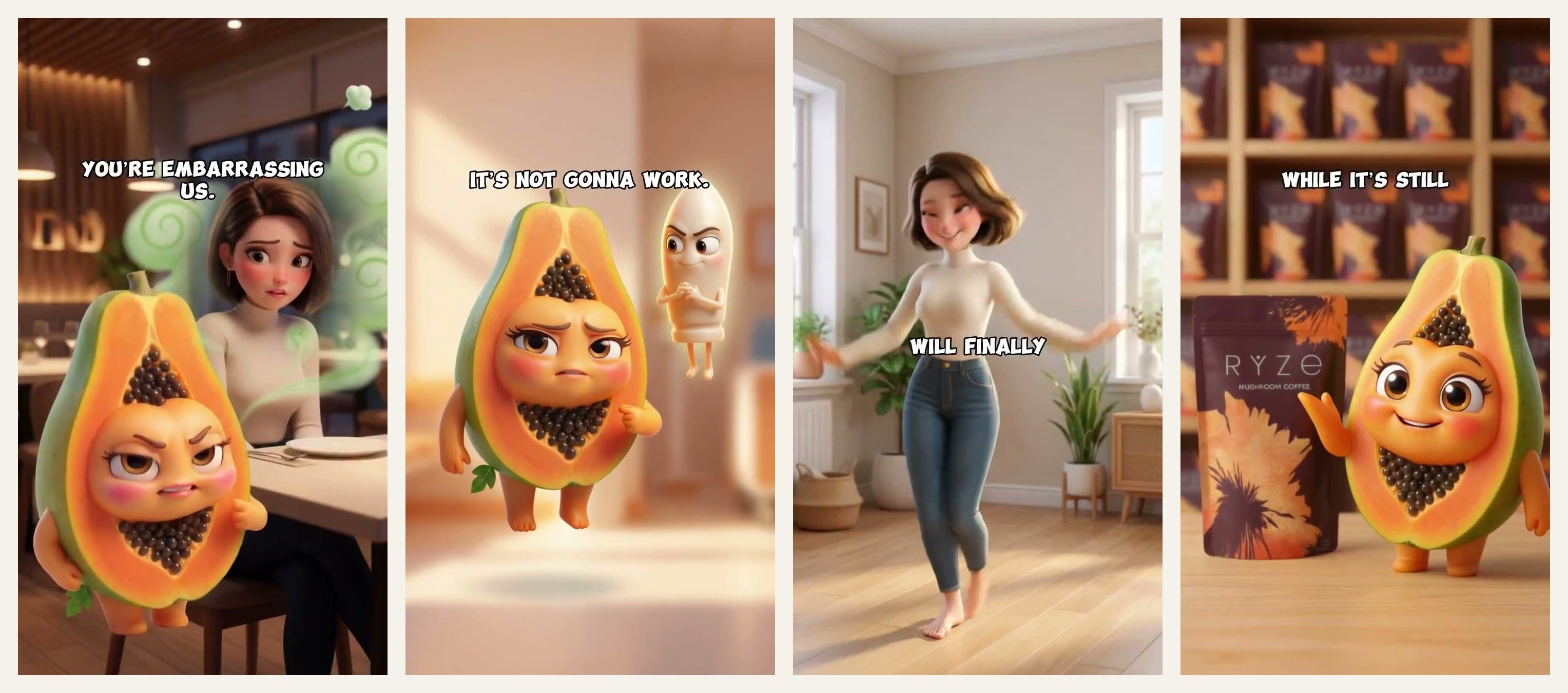
The ‘mock-Pixar-animation style'. Here the ideal is getting an animated character based on your product, or product problem, and the animating a story using AI.
If AI slop is something that shows obviously signs of being AI, then this has to hit the nail on the head.
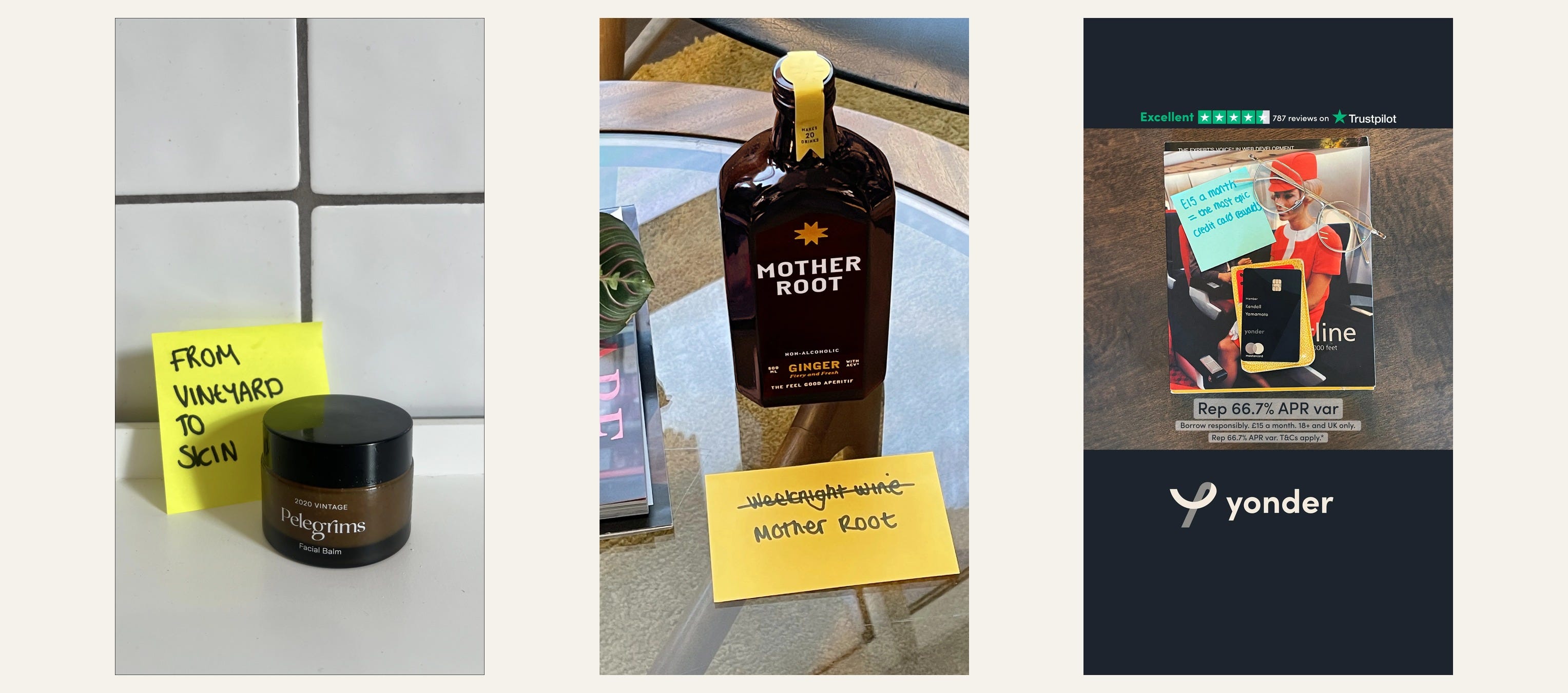
It’s not just AI slop, however. Post-it note ads were one of the big pushbacks a couple of years ago. And interspersed with all of this is various memes.
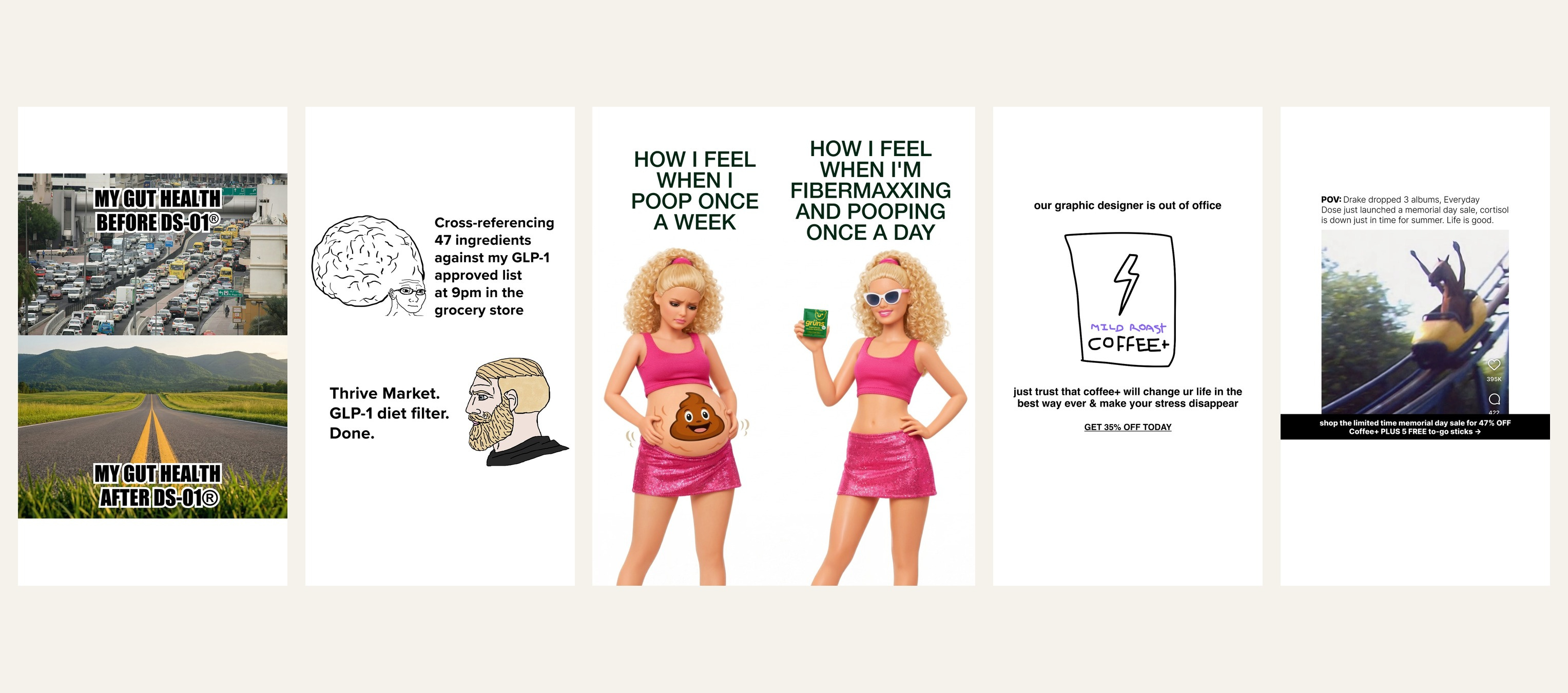
There’s something about ads like this, that when you show them to most people, you hear that phase ‘we need our ads to be a lot more premium than this.’
So what’s happening?
When did sales stop being the primary objective?
Forgive me a little wander through history here because I love this stuff. If you don’t care for the history skip on ahead.
When I entered the workforce in the early 2010s, it was into a digital and PR agency. I didn’t realise it at that the time, but that agency was one of the most forward-thinking there was when it came to measurement.
To my surprise, the current way that PR was measured was in a method called advertising value equivalent (AVE) where it judged column inches as ad spend and that was the ‘return.’ Most PR was so detached from achieving a sale, that it was judging itself wrongly against the rate card value of space in print.
But it wasn’t just PR that was at fault then. During the social media explosion, success was measured in likes and comments. And as it turns out the ad industry had shifted too.
The change happened slowly.
Perhaps the starting point was Cannes Lions beginning in 1954, initially as a festival for the ads that play in cinemas. It evolved from there. In 1959, the Clio Awards followed with categories for creativity outlined.
The 60s saw the ‘creative revolution’ - we got the Lemon ads – and then by the end of the decade ‘account planning’ was born. Stephen King of JWT said that advertising’s primary impact was to “intensify or lessen people’s existing predisposition,” and by the time the Account Planning Group (APG) was formed, the shift had been cemented towards long term brand building.
By 1980, the IPA had launched the IPA Effectiveness Award: already a signal that the industry was straying from actual impact.
Despite Ogilvy’s rallying cries throughout the 90s, by the time I entered the broader marketing profession in 2010, it seemed like selling was out of fashion.
Facebook launched the first growth team in the late 2000s. A team focused exclusively on improving important user metrics. As a tech company, it’s monetisation was a step removed at the time from the controllable asset. For them, to become monetisable, they needed one thing: daily active users, and that was what the growth team was responsible for.
While this was happening, traditional companies and big corporates continued down the route that advertising’s intent was not to sell but to think about values, storytelling, messaging, or vague brand building. Selling a product was the default norm for most big consumer businesses throughout the 2010s.
Growth meanwhile, born from Facebook, began to spread quickly through tech.
While Growth in b2b and tech became obsessed with funnel optimisation and less on the core way of getting traffic through the doors, the way it evolved in consumer and DTC brought advertising into the mix.
I think with hindsight two errors happened in the 2010s that contributed to today’s ‘selling issue’.
The data illusion that we could optimise towards last-click sales and have a true value of everything
The lack of need for payback due to influx of VC cash
I think these two things together brought a poor precedent to the industry. There was a belief that Growth was a bad force and “Growth at all costs” became a synonym for irresponsibility.
As we’ve entered the 2020s, another thing happened.
Platforms matured.
Today, it is less fluke or black box how you can grow a brand real big thanks to digital marketing.
There’s a system to approach it with and thousands of examples of businesses who have created their entire company value through paid social.
What that means as well is that more and more people pay attention to these numbers, these platforms, these creatives.
If in the 2010s most CMOs or heads of marketing in traditional businesses saw paid social as a misnomer and a black box; and by the early 2020s they saw it as a practice past its peak; then by 2026 it has now re-cemented its position in every marketing toolkit. And the outcome is more attention and eyeballs focused on this function.
Playing the right game: native creative
It’s no longer a surprise when you hear of a brand go from £0 to £20m from paid social alone. Or in the US, these numbers are even bigger. Gruns rocketed to $100m of annual revenue from a DTC + paid social strategy.
Everywhere you look, there are brands rocketing to seven, eight, and nine figures of revenue purely from paid social. And when that happens it makes all founders and marketers take note.
Naturally, lots of people want a piece of the pie.
But this is where things often become tricky.
This is where you get people want to hit paid social hard, without playing by its rules. And you really need to play the right game to win.
Paid social creative isn’t about producing ugly ads for ugly ads’ sake. It’s not about creating things that are disgusting to stand out. On the contrary, it’s about producing things that are relevant to the environment you’re playing in.
For us we broadly see a few camps of creative these days:
Native
Creator
Off-brand
Branded
Creator is your UGC and influencer, stuff created by a third-party either scripted or not.
Native is advertising imitating the environment (so types of images or videos that would get shared by people in Stories, Reels or DMs).
Off-brand is advertising that is still clearly an advert, but it’s not referencing the brand’s design, look and feel. We used to think of this as brand-native.
Branded is advertising that is in the brand design, look and feel.
While we can see ads in all brackets work, the data is overwhelmingly in one direction.
This is from our broader dataset, where native and creator are merged into one category but the trend is clear:
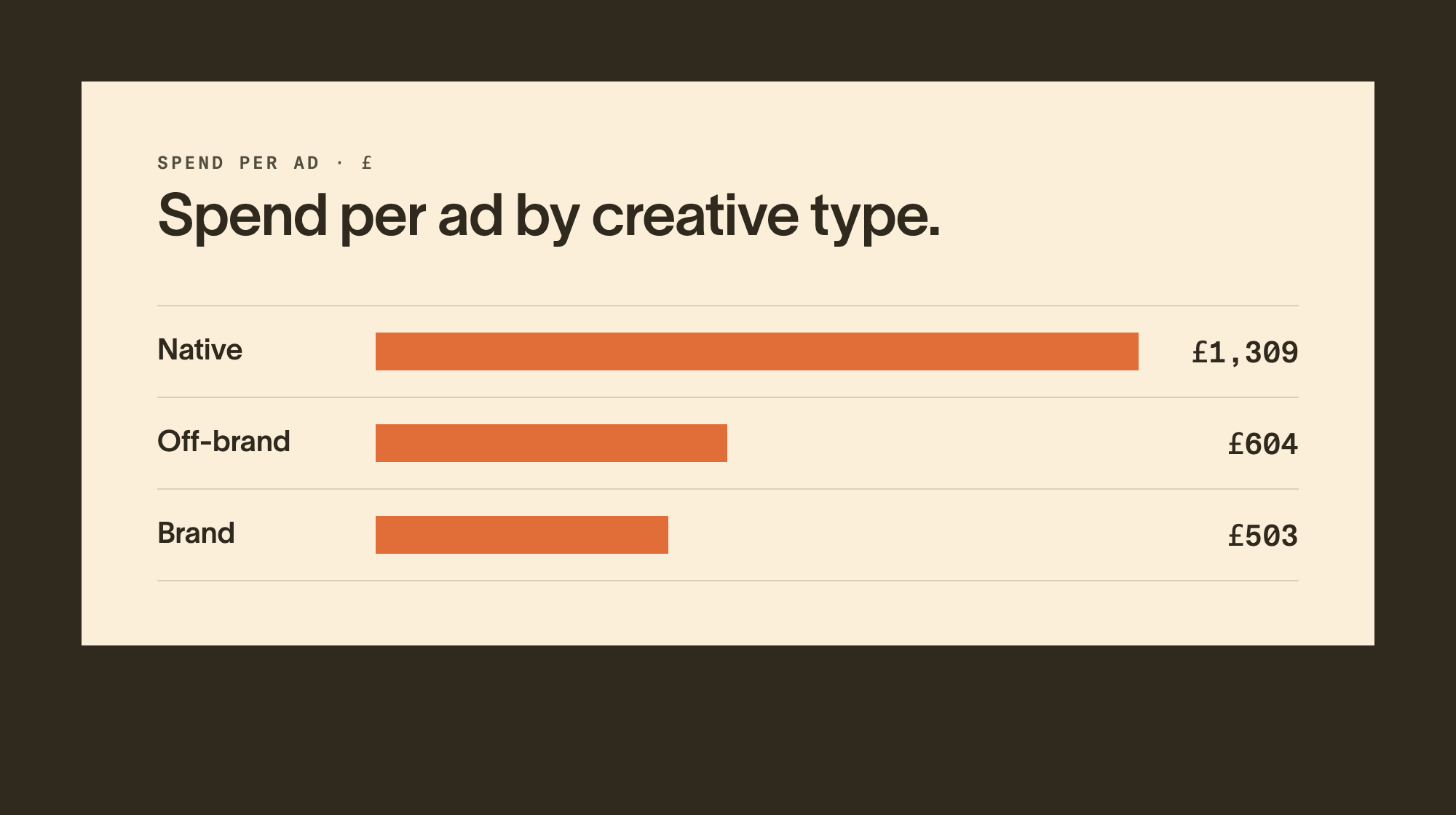
Add normalised CPAs into this chart and the CPAs reflect a similar picture: native is cheapest, then off-brand, then brand./
A few things to draw out from this data:
Spend per ad is over 2x higher for native vs brand.
Native and brand have almost even creation distribution across our agency
Off-brand has 1/5th of creation volume of either native/brand
Meta views spend as ultimate success metric and so here native is outperforming brand 2:1. And while we put down Off-Brand’s low performance to a very low experimentation volume, the native dataset is almost even with brand’s.
The message is clear, if you want to sell on paid social and want to put your best foot forward, create native & creator ads over branded ones.
If you want to sell via paid social, create as many native ads as possible.
What is native – and why does it work
There’s an important mental position I think we all need to take with paid social.
That is: it’s not about making ugly ads, it’s about playing into the environment that we know works best.
The native ads of the 50s
To understand some of Ogilvy’s success is to first understand Holiday magazine.
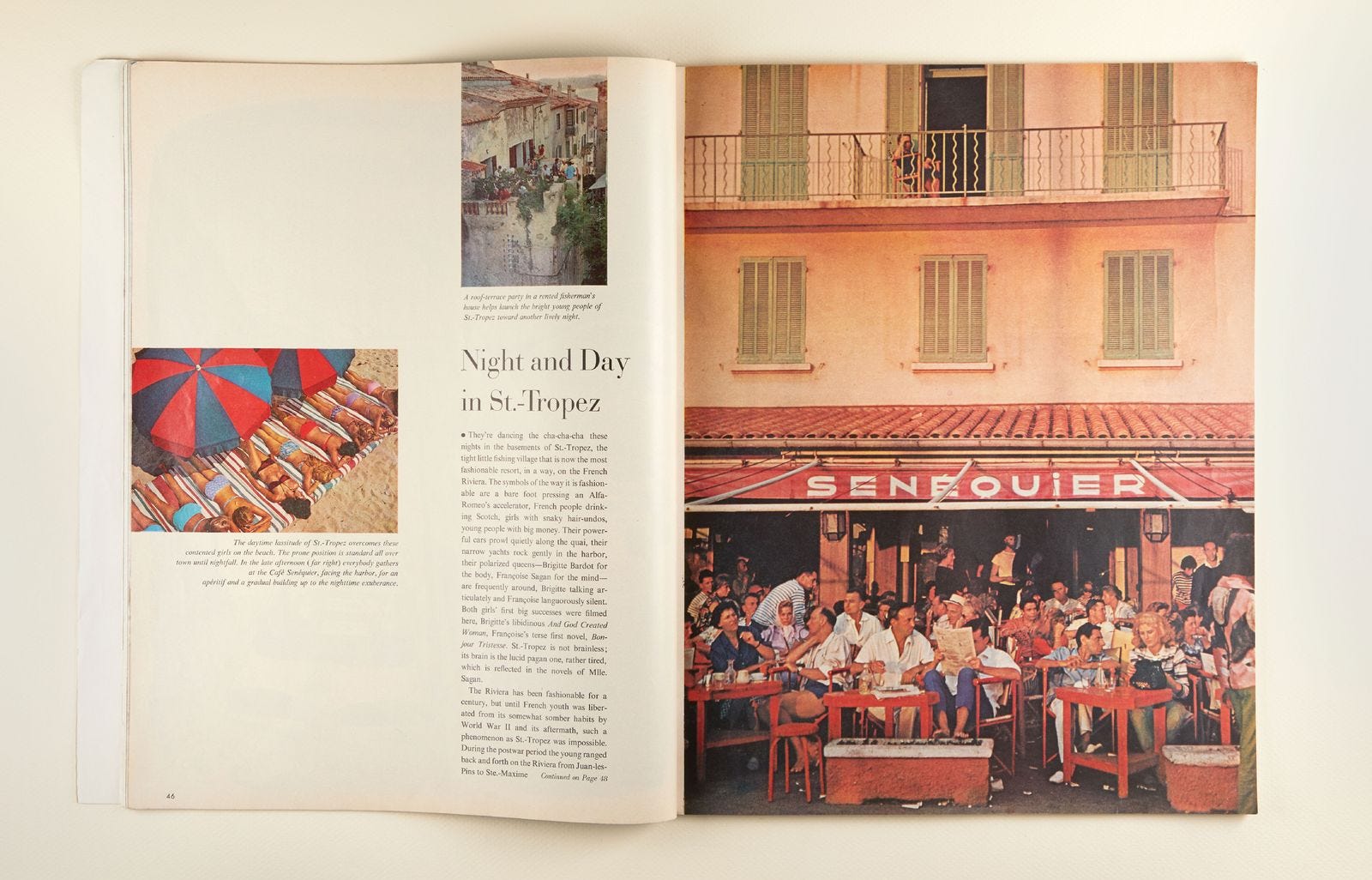
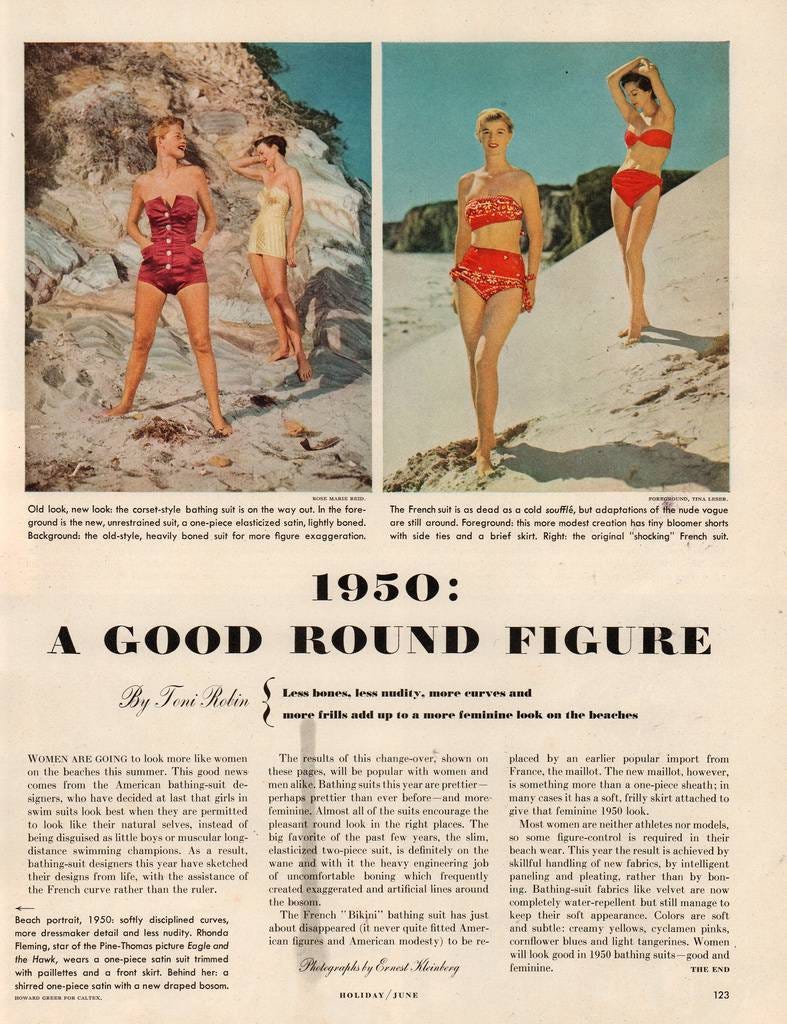
Holiday was an upmarket 50s magazine. And the key things to take away from this are the large colour photographs, plenty of white space, and well-set, long form serif typography.
From the Kenneth Roman book:
Impatient with trying to convey to writers and art directors what he wanted, more and more Ogilvy was showing them how to do it, writing the advertising and directing its look—big beautiful photographs (never artwork), usually a one-line headline beneath the photo serving as a caption, plus three blocks of readable text in a simple classic typeface. Ogilvy moved the names of products, usually relegated to logos at the bottom of ads, to the headline at the top.
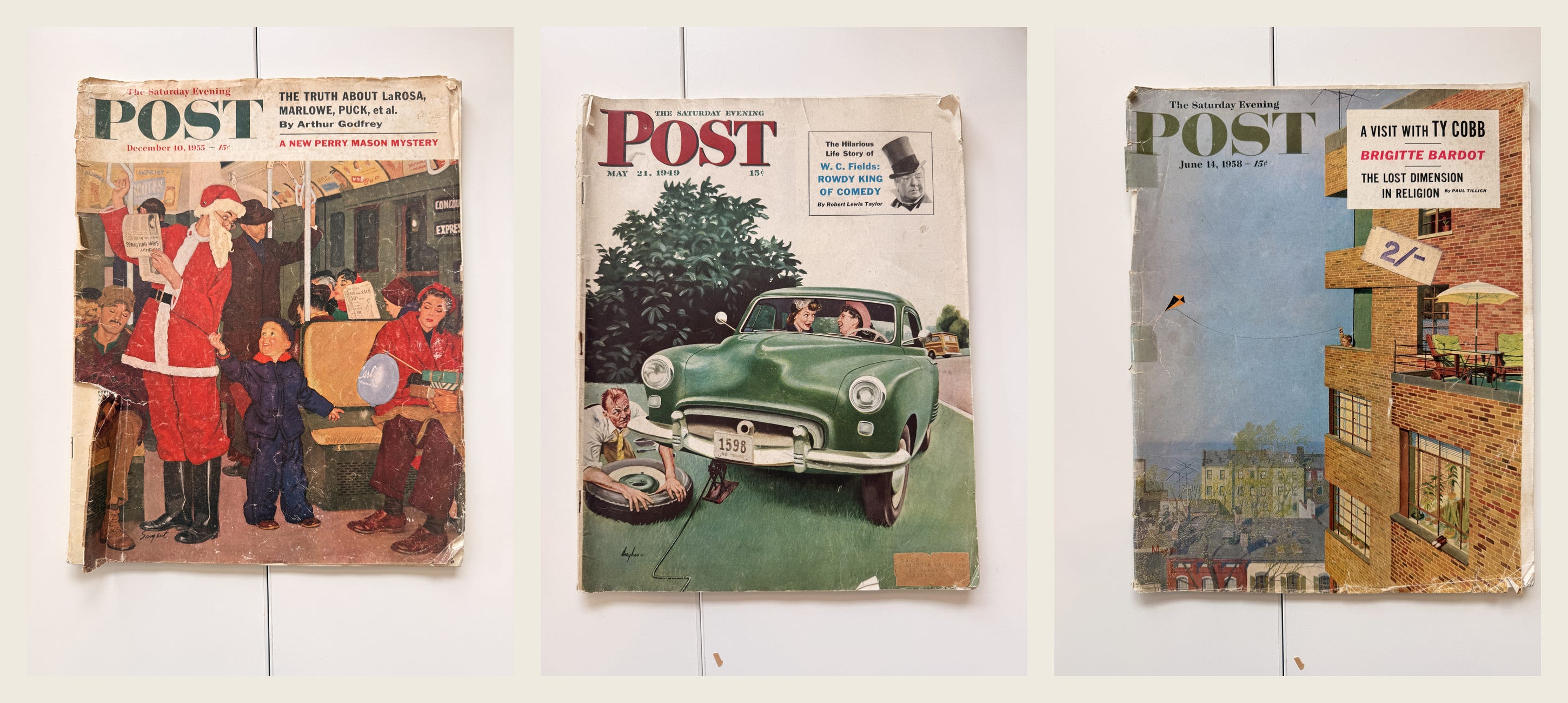
I went and bought a few old issues of the Saturday Evening Post to see what this looked like in practice. While the typefaces and photography quality in the articles is an immediate tell, you otherwise wouldn’t know this was a magazine from 70 years ago compared to one published today.
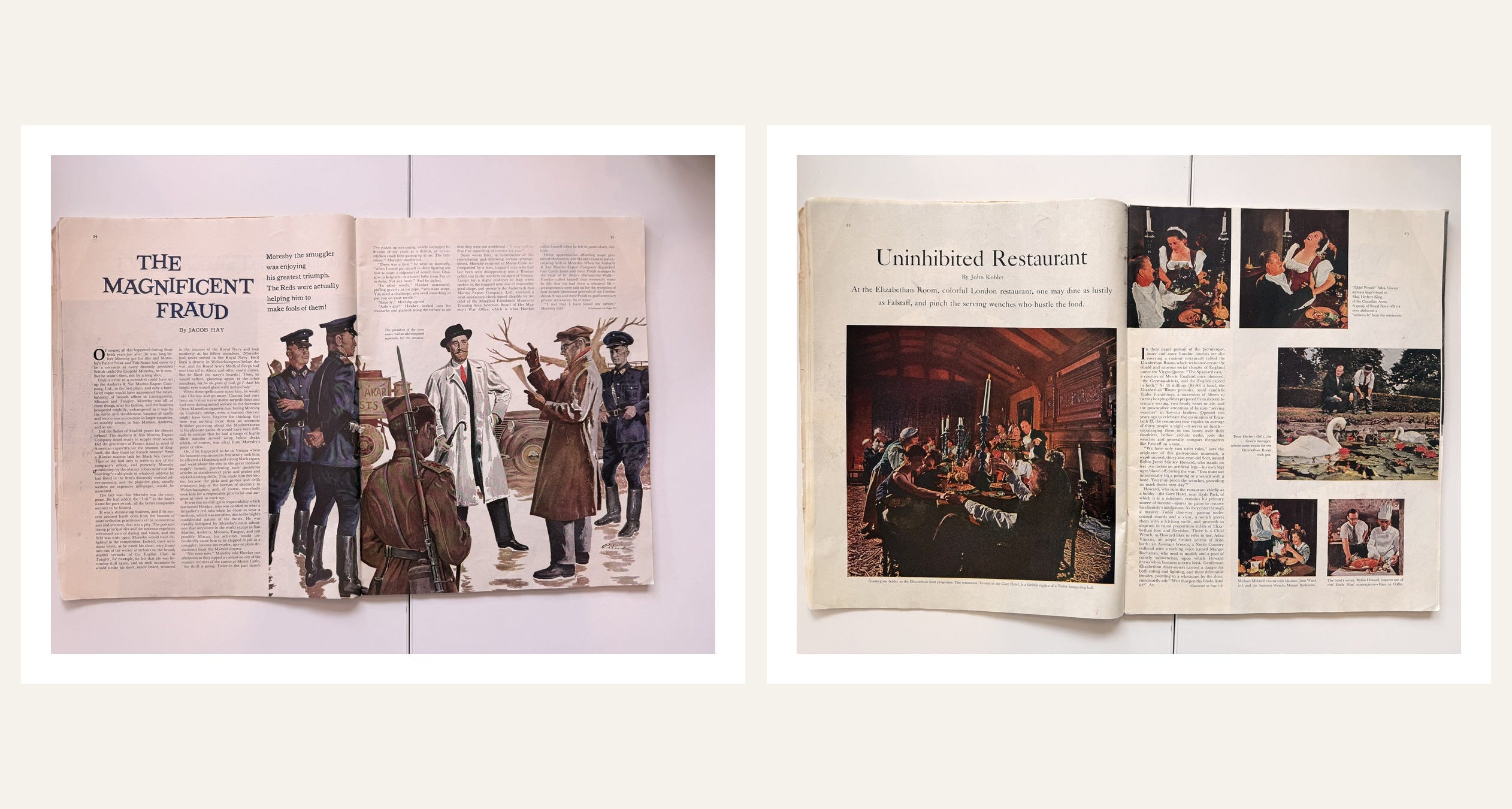
While the left-article still contains much illustration, this 1955 article on the ‘Uninhibited restaurant’ hits on a lot of the Ogilvy design tropes: colour photography, headlines, long text.
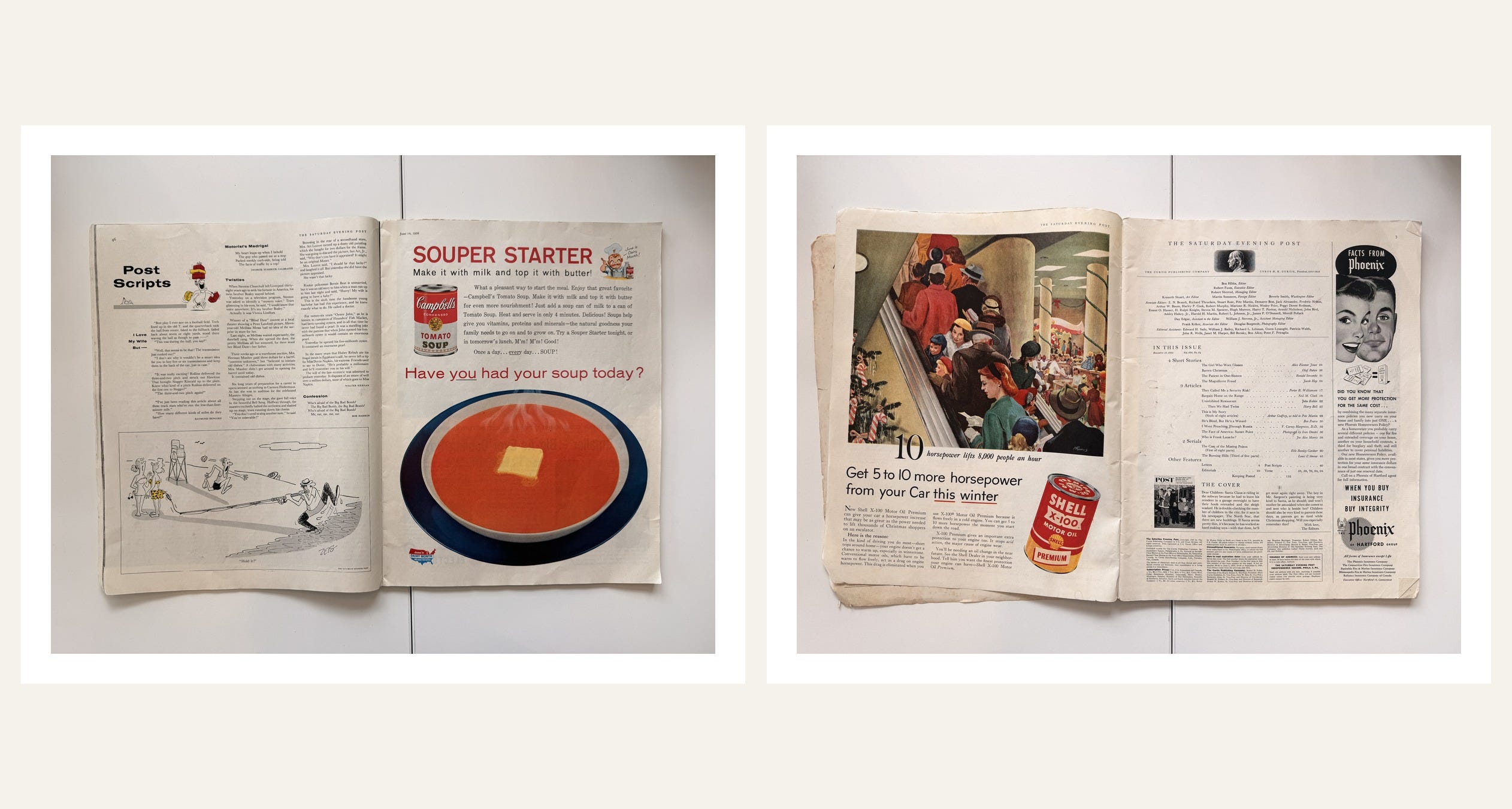
Often when browsing these magazines, it’s not clear where an advert begins and an article ends. The advertisers matched the space they were living in and played the game of the platform.
These were the native ads of the golden age of print advertising. And this was the era when print advertising’s primary motivation was to sell.
When we think about most big budget TV advertising, we have to consider again the environment it’s playing in.
If you’re the ad at the beginning of a film in the cinema, you need to mirror the expectation of the environment you’re playing in. Same with TV: if you’re interrupting a feature length film or high budget TV series, then anything less than stunning and you’ll switch off.
The environment is the important aspect. The Guinness Horses ad is a native ad.
The world we’re interrupting on social
Let’s remember why we open social media.
Once upon a time, we opened social media to see what our friends were up to. And the primary way we did that was by looking at what people were sharing.
Photos of dogs, children, nights out, holidays. All shot on your phone with the Paris or Valencia filter over them. An evolution of the early, Polaroid-aping days.
We weren’t on the platforms to discover brands and a polished ad would have stuck out like a sore thumb.
Today, we use these platforms differently. While we ostensibly still call them social media platforms, their new single-player mode is one for entertainment.
That entertainment means videos and images which are funny, enlightening, enraging, heartwarming, loving, educational, and everything in between. One minute you could be watching a YouTube rip of an 80s TV show pixellated to high heavens, the next it could be someone street interviewing someone on your favourite food.
The platforms have social sides too. Instagram’s head Adam Mosseri posted this back in January on Threads:
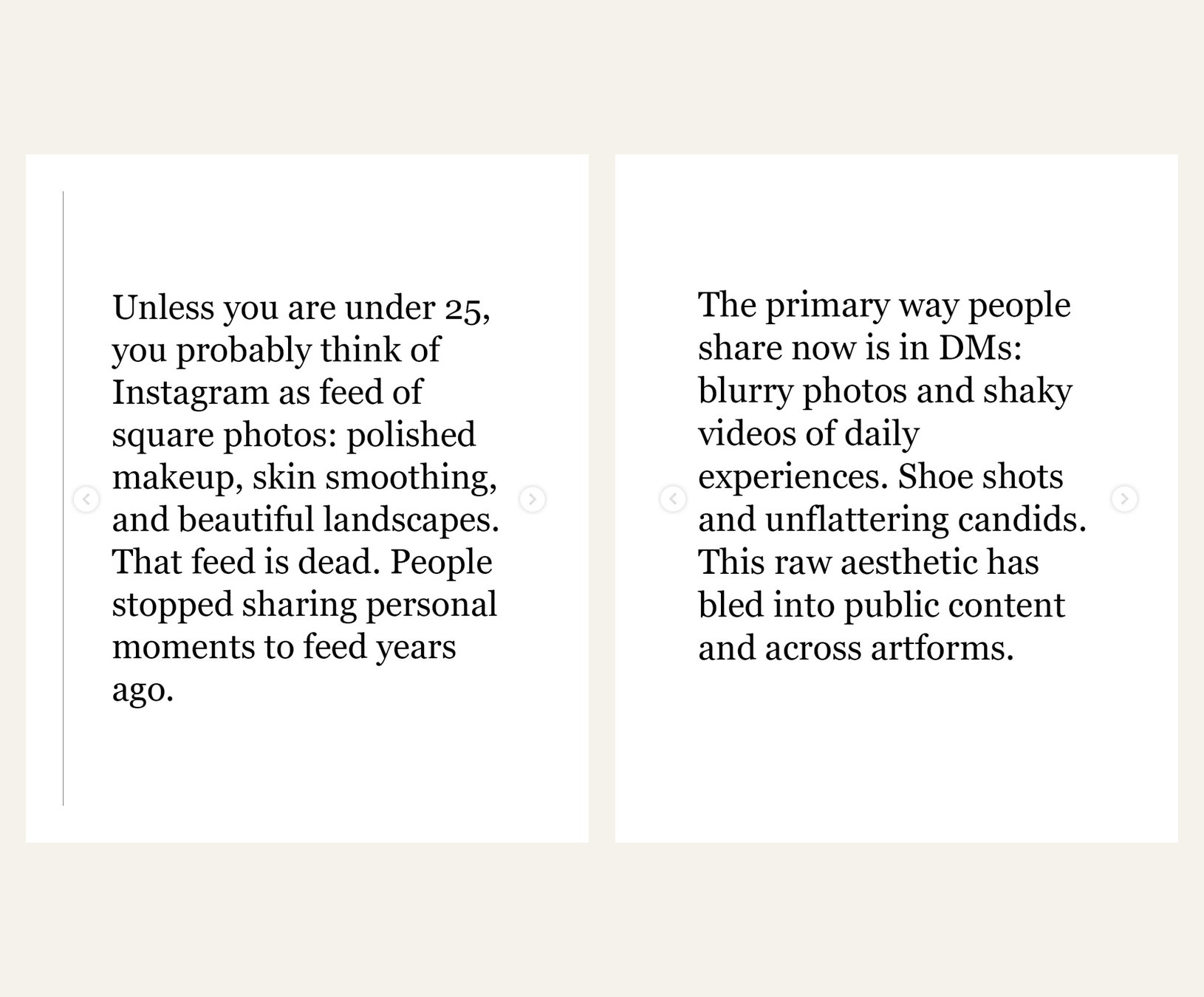
Instagram does have a social side today, but it’s more lo-fi than it’s ever been: blurred photos, shaky videos. Raw. Authentic. It is not polished.
Let’s take a look at a typical five-minute scroll on Instagram today, split evenly between Reels and Stories.
Once you get past the ads, and the small % of friends sharing their dogs, here’s what’s left.
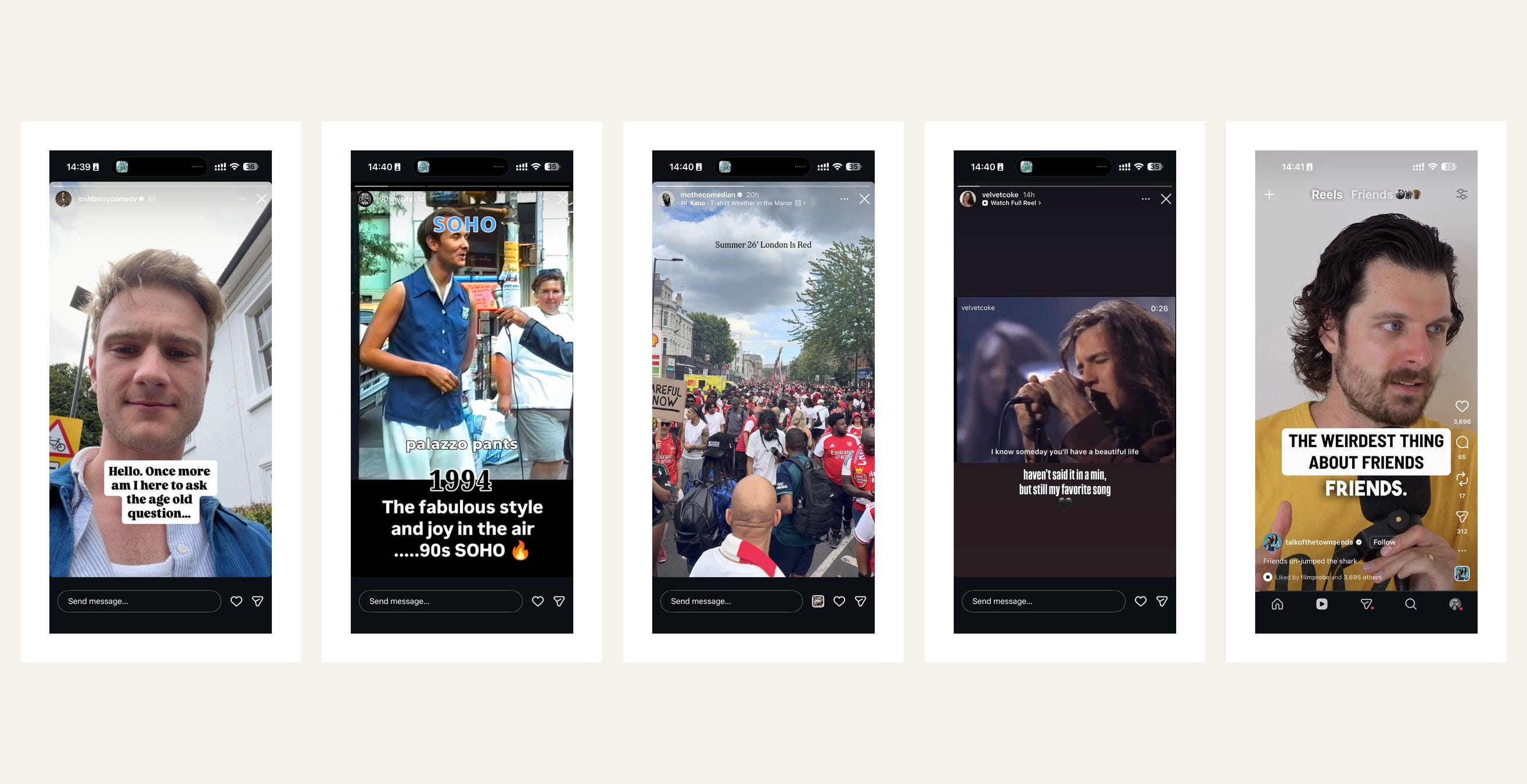
A start on Stories and we see:
A street selfie with a joke from a comedian I follow
A clipping from a 90s TV show showing off 90s NYC fashion
An overhead phone shot from the Arsenal parade
A YouTube rip of a music video captioned
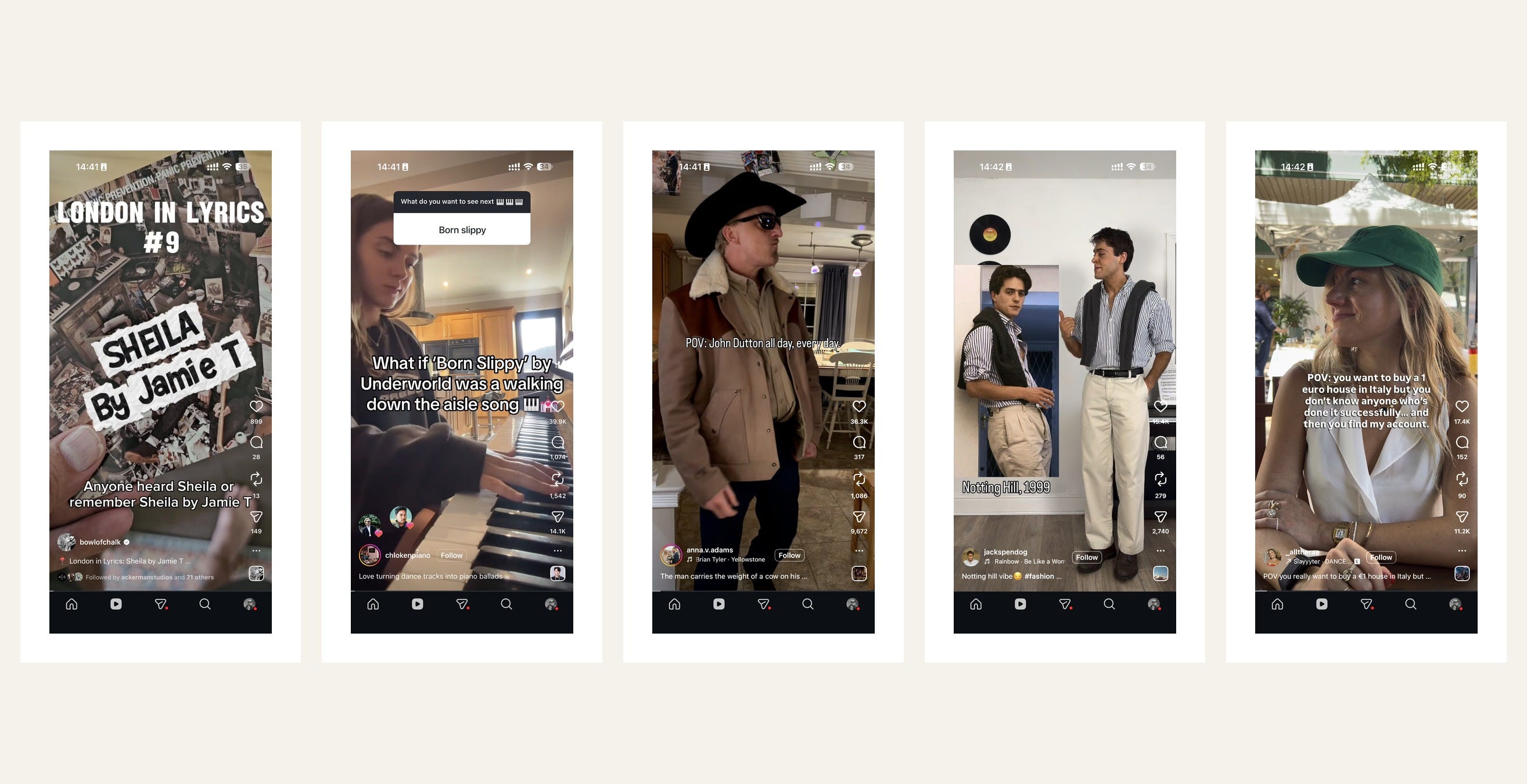
Open up Reels and what have we got?
Maybe a fake podcast, maybe a real one? I don’t care it’s just content
Nostalgic journey down 2000s indie lyrics with a comparatively ‘high production’ edit
Lo-fi video of pianist playing Born Slippy as a wedding song (ultra millennial coded)
Comedy sketch of someone dressed as John Dutton
Menswear content creator recreating the looks of Hugh Grant
Woman not saying anything with a POV caption selling the dream
The messaging in all of these differs.
We’ve got:
Nostalgia
Community
Social relevance
Escapism
Aspiration
Comedy
But the visual style is almost uniform in its distribution: everyone is shot with a phone. One video is reasonably edited but it’s still a pretty social-first edit style. Very scrappy and felt like it was edited on the phone.
Everything else is low number of edits, maybe some images popping up onto screen, but it’s most just someone with a phone recording something.
This is the world we’re interrupting.
And if we want to sell, we need to understand this world intimately.
For Ogilvy, that meant laying out your ads to look like a double page spread from Holiday or The Saturday Evening Post. For Guinness that meant creating a mini film to sit in between prime time film and TV.
But if your channel is social, you have to respect the channel. Create ads that look and feel authentic to the medium.
And if you’re worried about rich people having unfavourable views of your brand, just remember they’re also seeing this content too. Lo-fi, phone shot, authentic, natural shooting styles. That is after all why they opened Instagram this morning.
Start selling – and start doing it natively.
A few parting words on the ‘impact on brand’
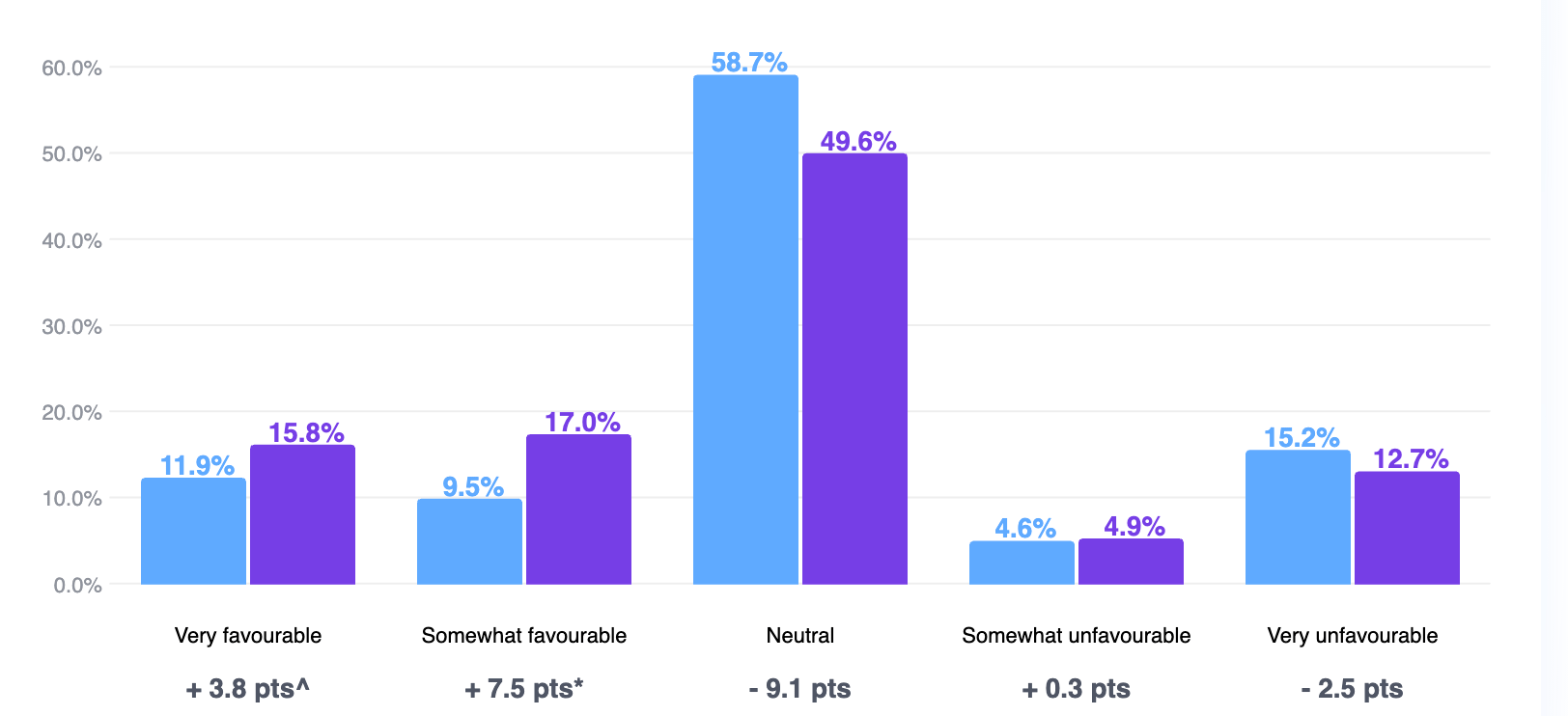
We had a client last year who asked us about the brand impact of lo-fi, native advertising.
We used Meta’s Brand Lift study to examine some classic brand metrics.
The above chart shows the brand favourability scores. Blue was those unexposed to ads, purple those who had been.
The native, scrappy, lo-fi, often ugly ads had a 11.3 point positive impact on favourability scores. It reduced neutral views by 9.1 points, and reduced very unfavourables as well.
Overall the swing was hugely positive. The people exposed to the ads liked the brand more than those who weren’t.
We’ve also seen the direct impact of Meta-only advertising on retail sales with a number of clients. Retail is the archetype of needing ‘brand recognition’ to make a sale. But in the multiple clients where we’ve run structured studies, we’ve seen the huge impact that Meta has on those offline sales channels.
Meta creates brand – and it creates it favourably and effectively.
We sell, or else
From day one, we have been about helping you sell. The point of advertising is not to create things that internal teams like the look of. It is not to preach to the converted. It’s not to find something. Although it can be those things.
The point of advertising is to sell.
Paid social is experiencing an all-time high because of the impact it can have when done right.
You can start a brand today in the US and get to $100m of revenue with Meta and a Shopify store alone. But you have to play the right game.
And if nothing else, then by creating content that looks like the Stories or Reels in your feed, we’re respecting our customer in their place of refuge. And even if we don’t manage to sell that time, at least we might leave an impression.
I’m the founder of Ballpoint. We’re a growth agency specialising in creative-driven performance marketing. In March 2026, we made the pivot to become AI native. For the clients we work with for more than a year, we typically triple their spend while maintaining CPA. If that’s something you want for your brand, then get in touch. Just be warned, we’re going to tell you how to sell.
Gosh, Josh this is a really great post. Thanks!
Very interesting thoughts Josh. As a numbers focused growth person who believes he doesn't know enough about 'brand' this helped bridge the gap for me .